Winehouse v Parry & Gourlay: court dismisses estate's claim over 141 items sold at auction
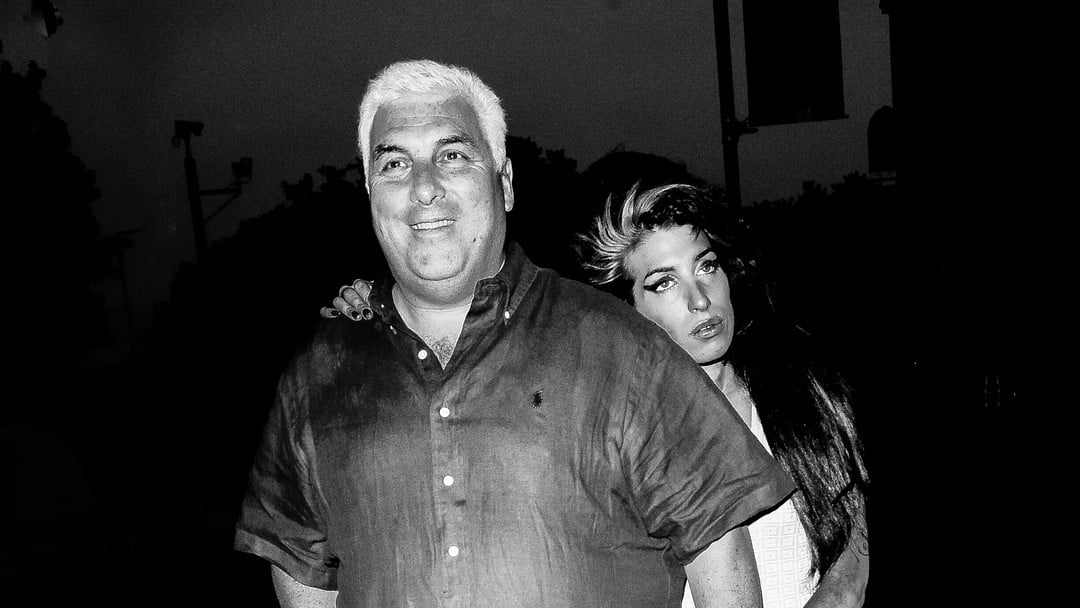
Amy Winehouse's estate failed to establish ownership of disputed items sold by two close friends of the singer at auction in 2021 and 2023.
The High Court has dismissed all claims brought by Mitchell Winehouse, personal representative of the estate of Amy Winehouse, against Naomi Parry (Amy's former stylist) and Catriona Gourlay (a longstanding friend), following a trial heard in December 2025 and January 2026. The judgement, handed down by Sarah Clarke KC sitting as a Deputy Judge of the King's Bench Division, addresses 141 items sold at Julien's Auctions in Los Angeles, which together realised over $1.2 million.
Both defendants had known Amy Winehouse for many years before her death in July 2011. Ms Parry worked as her stylist from around 2006 and lived with her at various points; Ms Gourlay had been a close friend since 2002. The disputed items fell into three categories: items the defendants claimed always to have owned (Category A), items allegedly gifted to them by Amy (Category B), and a small number of miscellaneous items (Category C).
The claimant alleged that the defendants had converted the items by selling them at auction, that the sales had been deliberately concealed from him, and — in respect of Ms Parry alone — that she had acted in breach of fiduciary duties arising from her role in facilitating the estate's participation in the 2021 auction.
Gifts, delivery, and the law of chattels
The most substantive legal analysis concerned the requirements for a valid gift of a chattel at common law. The Deputy Judge affirmed that two elements must be established: intention by the donor to make a gift, and delivery of the item to the donee. Applying Thomas v Times Book Co Ltd [1966] and Day v Harris [2013] EWCA Civ 191, she confirmed that words of gift are not a legal necessity — they are one form of evidence capable of proving intention, but conduct and surrounding circumstances may equally suffice.
This approach was significant given the nature of the relationships involved. The court accepted that between young women living together or spending considerable time together, gifting arrangements were often informal, spontaneous, and unrecorded — and that this was entirely consistent with the evidence of Amy Winehouse's well-documented generosity. Amy was found to have given away items freely and frequently, including to near-strangers, and the court found no basis for concluding that either defendant had helped themselves to items without her consent.
The claimant's submission that "the law does not cater for fluid arrangements between young girls" was expressly rejected. The Deputy Judge held that the common law is "perfectly capable" of accommodating such arrangements, provided the evidence, taken as a whole, proves both intention and delivery to the required standard.
On the evidence, valid gifts in law were established in respect of all Category B items for both defendants.
The Final Tour dresses
Particular attention was given to the eleven bespoke dresses designed by Ms Parry for Amy's cancelled 2011 European tour. The court found that the two women had agreed in Brazil earlier that year that the dresses would belong to Ms Parry as designer. This agreement was unwritten, but the Deputy Judge identified twelve strands of circumstantial evidence supporting it — including the absence of any design fee in Ms Parry's invoices, the tight timeline, the informal nature of their working relationship, and the fact that Mr Winehouse had never sought the return of the dresses in the years between 2011 and the auction.
Limitation and concealment
The only item in respect of which the estate was found to have an immediate right to possession was the D&G split dress (Disputed Item 6), which Ms Parry had removed from Camden Square after Amy's death with permission but without a specific gift having been made. The court found this amounted to conversion, but that the claim was time-barred under section 3(1) of the Limitation Act 1980, as the conversion occurred prior to 30 October 2017. The claimant could not invoke section 32(1)(b) because the Deputy Judge found no deliberate concealment — and in any event held that, with reasonable diligence, he could have discovered the defendants' claims to ownership well before the auction.
Fiduciary duty
The allegation that Ms Parry owed fiduciary duties to the claimant was dismissed. Applying Hopcraft v Close Brothers Ltd [2025] UKSC 33, the court found that Ms Parry had not consciously assumed responsibility to act exclusively on the estate's behalf. She had helped considerably and without payment, but Mr Winehouse had maintained his own direct lines of communication with Julien's Auctions throughout, and no formal agency or intermediary arrangement had been established or assumed.
 Copyright & permissions