


UAB Business Enterprise v Oneta Limited: court finds settlement agreement genuine despite expert fraud concerns
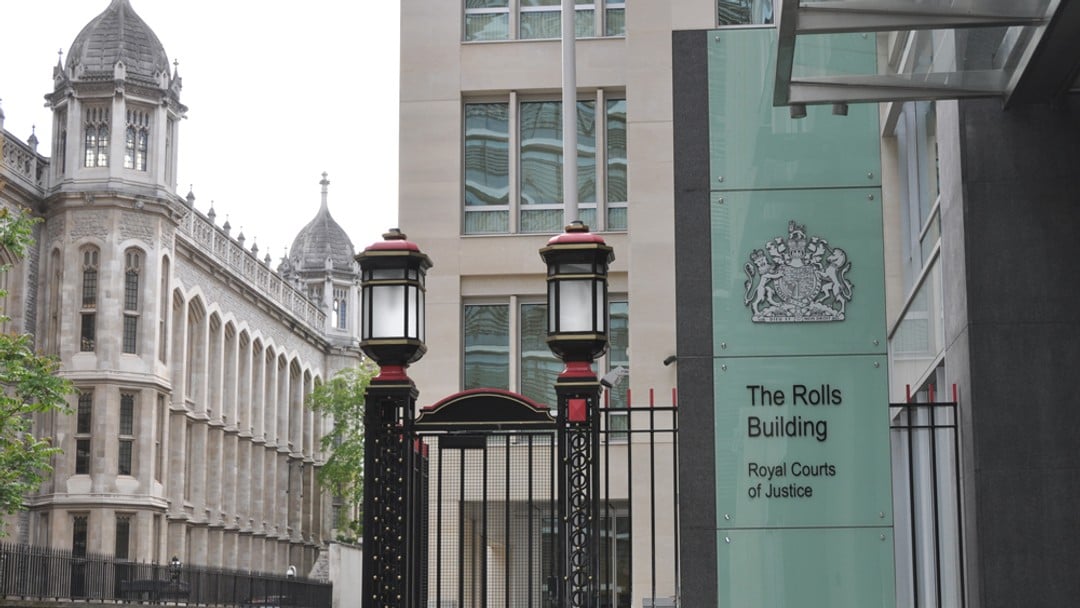
A High Court judge rejects forensic document evidence in favour of factual witness testimony, restoring a Lithuanian builder's ownership of a UK property company.
In a judgement handed down on 11 March 2026, ICC Judge Agnello KC ruled that Liudas Prusinskis is the lawful owner of Oneta Limited, a property development company holding assets in London and Kent. The decision in UAB Business Enterprise & Anor v Oneta Limited & Ors [2026] EWHC 543 (Ch) turned on questions of document authenticity, witness credibility, and the weight to be given to expert forensic evidence formed without reference to the underlying facts.
Oneta was incorporated in 2013 by Donatas Bubnelis, who remained its sole director and shareholder until June 2021, when he sold the single issued share to UAB Business Enterprise — a Lithuanian company owned by Laimonas Jakstys — for £1. The Claimants sought a declaration that UAB remained the lawful shareholder following changes to the Companies House register made by Prusinskis in reliance on a settlement agreement dated 14 May 2022.
Prusinskis maintained that from early 2015 he had invested approximately £282,000 into Oneta — including sums advanced by his partner — and carried out extensive building work on the company's properties. He asserted this was done pursuant to an oral agreement with Bubnelis entitling him to shares proportionate to his investment, later memorialised in a written investment agreement signed in Thailand in July 2016.
The settlement agreement and expert evidence
The central document was a settlement agreement purportedly signed by Jakstys on 14 May 2022 at the Lithuanian home of Prusinskis's brother, Lauras. The agreement was printed on shortened scrap paper — the only material available — and the final page was fed through the printer twice after a signature block was omitted on the first pass.
The joint expert, Ms Radley, gave evidence that there was "very strong evidence" the document was not genuine, citing non-standard page lengths, font and alignment inconsistencies on the signature page, and additional staple holes suggesting a different history for the third page. She concluded the document bore hallmarks of a manipulation process in which a genuine signature had been obtained on a blank sheet and surrounding text added later.
Judge Agnello accepted the evidence of Prusinskis, Lauras and witness Mr Metrikis, finding all three honest and credible, and placed Ms Radley's opinion in its proper context: it had been formed in a vacuum, without the factual evidence explaining the document's unusual characteristics. The judge accepted that Lauras had shortened the text to fit the cut pages, explaining the proximity of print to the page edge, and that the third page had been reprinted to add a missing signature block, accounting for the anomalies Ms Radley identified.
A further material factor was that the settlement agreement contained valid Companies House login codes for Oneta, which Prusinskis used to effect the register changes. No plausible explanation existed for how those codes could appear in a fraudulent document other than Jakstys having provided them.
Witness conduct
The judgement contains unusually pointed findings on Jakstys's conduct during cross-examination. He was found to have worn smart glasses connected to his mobile phone through which he was coached in his answers. His repeated calls immediately before taking the oath — recorded under the contact name "abra kadabra" — and the manner in which the coaching ceased only when his glasses were confiscated led the judge to reject his evidence in its entirety.
Bubnelis fared no better. Despite denying any oral agreement or knowledge of works carried out at the properties, he was unable to account for contemporaneous emails placing Prusinskis at the centre of Oneta's property activities, or for his own continued involvement with the company after he had transferred the shares.
Outcome
The settlement agreement was declared genuine and binding. The court further granted rectification by construction to include UAB as a party, there being a clear mistake in omitting it as the registered shareholder obliged to effect the share transfer. The company's register was rectified accordingly, with Prusinskis confirmed as director and shareholder of Oneta Limited.
The case is a reminder that expert opinion on document authenticity — however carefully reasoned — must be evaluated alongside all factual evidence, and that an opinion formed without knowledge of how a document came to exist may carry limited weight when the surrounding circumstances are credibly explained.
 Copyright & permissions