



Tooley v Times Media: court refuses injunction and Norwich Pharmacal order in privacy and defamation dispute
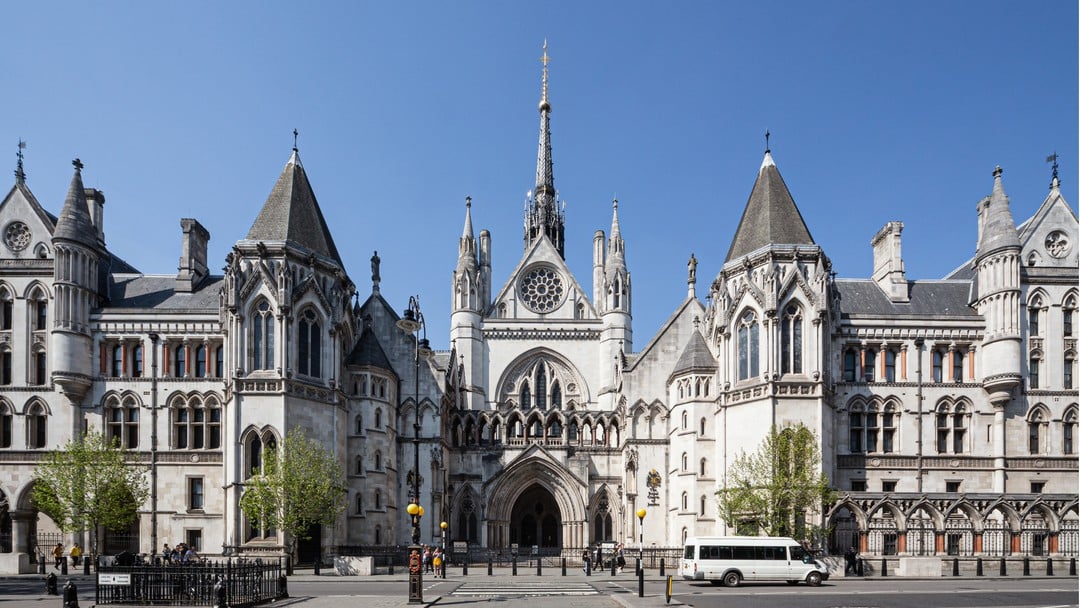
The High Court declines interim relief and source disclosure in a case involving a private video.
The King's Bench Division has refused all three applications brought by Cynthia Niruka Tooley against Times Media Limited following the publication of an article in The Times in February 2025. Mrs Justice Steyn, sitting in the Media and Communications List, dismissed applications for an interim injunction, a Norwich Pharmacal order, and permission to amend both.
The article, headlined "Wife of anti-woke professor says she was 'bullied' by police", drew on a private video recording the claimant had made two days before publication. The claimant maintained she had sent it to a single recipient in confidence. She brought claims in misuse of private information, breach of confidence, defamation and malicious falsehood, though the causes of action evolved considerably over the proceedings.
The amendment application and cause of action shopping
The central procedural difficulty was the claimant's attempt, via her amendment application, to reframe the injunction as being "primarily" sought on grounds of misuse of private information and breach of confidence rather than defamation. The court rejected this characterisation. Steyn J found that the essential purpose of the injunction remained the protection of the claimant's reputation. The original claim had been framed entirely in defamation and malicious falsehood; damages of up to £150,000 were claimed; and a "prominent apology and correction" was sought — relief plainly directed at reputational harm rather than privacy.
The judgement engaged with the principle, drawn from LJY v Persons Unknown [2017] EWHC 3230 (QB) and McKennitt v Ash [2008] QB 73, that courts will apply the more demanding defamation rule where the nub of the complaint concerns damage to reputation, regardless of the label attached to the cause of action. Steyn J noted the claimant's confirmation at an earlier hearing before Heather Williams J that the claim against Times Media was solely in defamation — a concession that weighed heavily against the subsequent reframing.
The interim injunction
Applying the rule in Bonnard v Perryman, the court will only restrain a defamatory publication before trial where the statement is unarguably defamatory, there is no arguable defence of truth, no other defence might succeed, and there is evidence of an intention to republish. The claimant's case did not come close to meeting that standard. The statements complained of were arguably directed at the police rather than the claimant, and Statement B — that she felt "bullied and harassed" — was defensible as true given verbatim passages from the recording in which she described the police as being used "to intimidate people" and said: "I'm being bullied. … I'm being harassed."
The court also noted that the order sought was drawn too widely, extending to reader comments already removed and containing a preservation order unsupported by any evidence of non-compliance.
Steyn J added that even on the lower Cream Holdings threshold applicable to privacy claims, the application would have failed. Broadly the same information had been in the public domain since March 2025 by virtue of a Family Court judgement in Tooley v Tooley, and the claimant had herself declined to seek anonymisation in those proceedings, observing that "the horse is well and truly out of the stable."
The Norwich Pharmacal application
The claimant sought disclosure of the identity of the person who supplied the video to The Times, arguing she could not be certain whether the recording had been passed on directly or via an intermediary. The court found the necessity threshold under section 10 of the Contempt of Court Act 1981 was not met. In her own correspondence, the claimant had written that there was "no ambiguity as to source" and had identified a named individual — Harriet Dunbar-Morris — as the sole recipient of the recording. No attempt had been made to ask that individual directly whether she had disclosed the material.
Given the strong public interest in protecting journalistic sources recognised in both section 10 and Article 10 ECHR, and in the absence of any compelling reason to displace that protection, the application was refused. The court was not persuaded that the interests of justice were sufficiently pressing, particularly where a direct enquiry to the putative source remained an obvious and untaken step.
All three applications were refused.
 Copyright & permissions