


Textor v Iconic Sports Eagle Investment: Court of Appeal confirms concurrent obligations in share sale completion
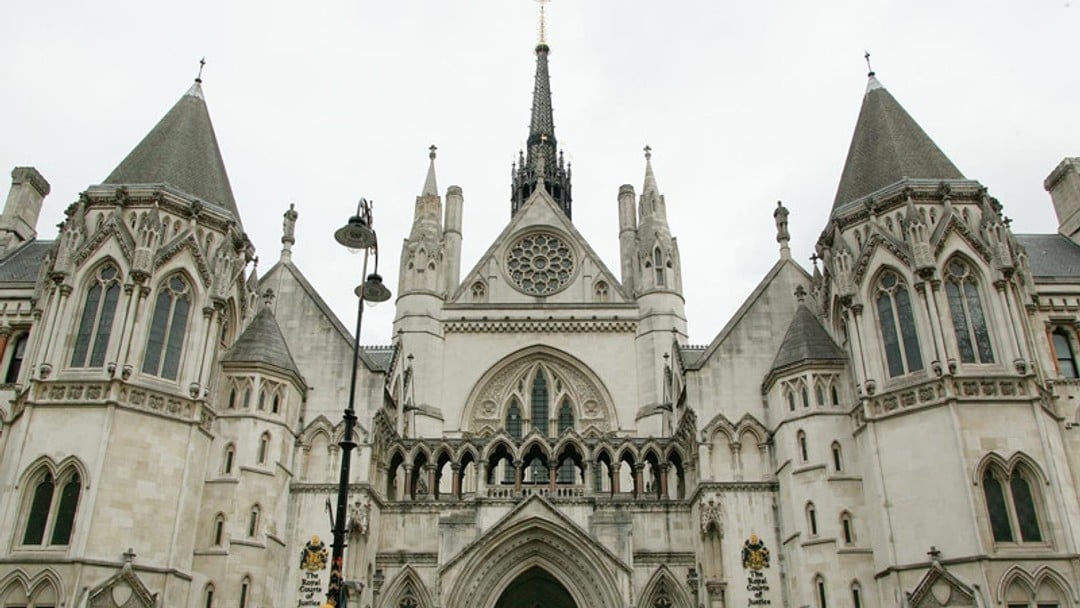
Delivery and payment in share sales are presumed concurrent — clear words required to impose sequence.
The Court of Appeal has dismissed John Textor's appeal against a Commercial Court ruling that his obligation to pay for shares under a Put Option Agreement arose simultaneously with, rather than after, the seller's obligation to deliver transfer documents. The decision in Textor v Iconic Sports Eagle Investment LLC [2026] EWCA Civ 355, handed down on 25 March 2026, reinforces the strong presumption that delivery and payment in share sale agreements are concurrent conditions — and confirms that the words "subject to" are insufficient, without more, to displace it.
The dispute arose from a 2022 investment agreement under which Iconic acquired approximately 15% of Eagle Football Holdings Limited, the vehicle through which Textor owns several football clubs. A concurrent Put Option Agreement gave Iconic the right to require Textor to repurchase its shares — the "Option Shares" — at cost plus 11% annual interest if a planned De-SPAC transaction did not proceed. The De-SPAC failed, and Iconic duly exercised the option in July 2023, fixing a repayment date of 26 July 2024.
Textor neither paid nor completed the purchase. When Iconic brought proceedings for specific performance, he argued that his payment obligation under clause 3.3 was a condition dependent on Iconic first delivering all transfer documents under clause 3.2 — the opening words of clause 3.3 providing that his obligation arose "subject to" Iconic's compliance with clause 3.2. On his reading, until Iconic had performed first, he was under no obligation to pay.
HH Judge Pelling KC rejected that interpretation at first instance, finding that the obligations were concurrent conditions. The Court of Appeal, comprising Lords Justice Popplewell, Phillips and Miles, unanimously agreed.
Lord Justice Phillips, giving the leading judgement, affirmed the well-established presumption that in any sale and purchase — whether of goods, land or shares — delivery and payment are concurrent conditions reflecting the fundamental character of the transaction as an exchange. The Sale of Goods Act 1979, section 28, makes this express for goods; the same presumption applies to land sales and, as confirmed in Doherty v Fannigan Holdings Ltd [2018] EWCA Civ 1615, to share sales. Neither party is required to perform first and bear the risk of the other's non-performance. Clear language is required to rebut the presumption.
The court found no such language here. Reading clause 3 as a whole, the agreement plainly contemplated a single completion event — a simultaneous exchange of documents for payment at a fixed date and place. The definition of "Completion" itself referred to the mutual performance by both parties of their respective obligations. The "subject to" formulation in clause 3.3 was properly understood as requiring Textor to pay upon receipt of the documents, not as imposing an obligation on Iconic to deliver regardless of whether Textor paid. The same words had been considered in Doherty and held insufficient to rebut the presumption even when combined with additional sequential language.
The court also noted that Textor's interpretation would have rendered the default provisions in clause 4 largely unworkable: those provisions were premised on Iconic retaining the Option Shares pending payment, and clause 4.2's reference to "Option Shares held by Iconic" could only make sense on the basis that Iconic had not already transferred them.
The underlying commercial context carried particular weight. The Put Option Agreement was expressly structured as an insurance mechanism for Iconic. The parties had openly contemplated the possibility that Textor might be unable to pay — a risk that had in fact materialised. The Judge had found that Textor neither intended nor was able to pay at any material time. In those circumstances, it was commercially improbable in the extreme that the parties had intended Iconic to be required to part with the shares without simultaneous receipt of the price.
Ground 2 of the appeal — whether Iconic was itself ready, willing and able to perform its delivery obligations on the repayment date — was adjourned and remitted to the Commercial Court.
 Copyright & permissions