


Ranpariya v Government of India: High Court grants partial permission in complex extradition appeal
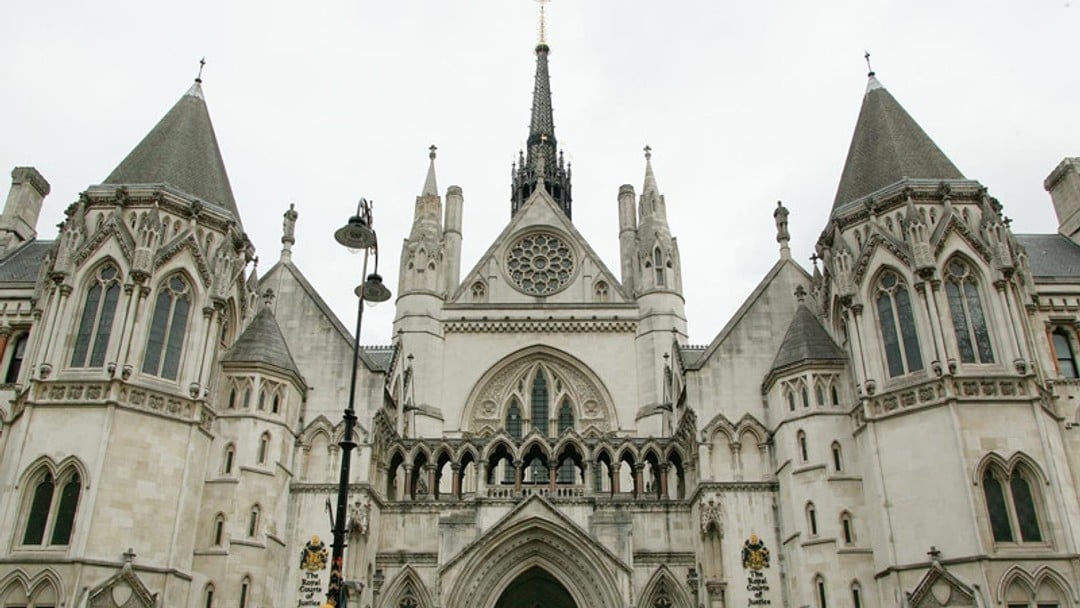
Extradition appeal raises significant questions on particularisation, torture risk, and the reliability of Indian diplomatic assurances.
The High Court has granted permission to appeal on four of seven grounds in Jaysukh Ranpariya v Government of India [2026] EWHC 682 (Admin), a case concerning extradition to India on charges of murder and four counts of conspiracy to murder. Mr Justice Sheldon delivered judgement on 23 March 2026, following a renewal hearing after leave was refused on the papers by Jeremy Johnson J in September 2025.
The underlying extradition hearing before District Judge Griffiths had itself been substantial — 19 days of evidence, a 836-paragraph judgement running to 296 pages — before the matter was sent to the Secretary of State, who ordered extradition in June 2023.
Particulars and prima facie case
Permission was granted on Grounds 1 to 3, which concern whether the extradition request was adequately particularised and whether a prima facie case existed for each allegation. Sheldon J found it arguable, at least in respect of Allegation 2 — the shooting of Professor Parshottam Rajani on 14 November 2019 — that the supporting material was insufficiently clear as to the precise conduct alleged. The documents appeared inconsistent as to whether the applicant had instructed that Professor Rajani be killed or merely intimidated.
The admissibility of evidence from co-accused also remained live. The District Judge had relied on R v Pentonville Prison Governor, ex parte Schneider (1981) to admit statements from co-accused who were to be tried separately. Sheldon J considered it arguable that Schneider should not have been followed, and extended legal aid to allow further exploration of reliability — particularly given that the co-accused had themselves made torture allegations against the Indian authorities.
Article 3 and torture risk
Ground 5, concerning the real risk of torture on return, was permitted in part. The District Judge had rejected the applicant's account of past torture in India, making detailed findings that his allegations were inconsistent, uncorroborated by contemporaneous medical and court records, and that he had failed to raise them either when produced before Indian courts during detention or upon arrival in the United Kingdom.
Sheldon J upheld those findings as plainly open to the District Judge and declined to permit an argument that the possibility of past torture remained relevant to future risk. Reliance on Karanakaran v Secretary of State for the Home Department [2003] — which addressed the evidential approach in refugee claims — was rejected as inapposite where, as here, findings of fact had been made on evidence and witness credibility assessed at a contested hearing.
Permission was nonetheless granted on the broader torture risk ground in light of Bhandari v India [2025] EWHC 449 (Admin), a Divisional Court decision which found the use of torture to obtain confessions in India to be "commonplace and endemic" and had been reached on materially similar evidence. The co-accused's torture allegations were also considered potentially relevant to this ground.
Refused grounds
Permission was refused on Grounds 6 to 8. The District Judge's conclusions on prison conditions, suicide risk, and the section 91 oppression bar were found to be properly reasoned and evidentially supported. Detailed assurances from the Government of India — covering the applicant's cell environment, removal of ligature points, mental health provision, and access to hospital treatment — were found to have been given in good faith and to be specific to the applicant's circumstances.
On the life-without-parole issue (Ground 7), the District Judge had accepted the evidence of Professor Lau that assurances from both the Government of India and the State of Gujarat provided for remission eligibility after 14 years. Sheldon J agreed that the contrary arguments — centred on the possibility of a third-party constitutional challenge under Article 14 of the Indian Constitution — were speculative, and that the District Judge had been entitled to dismiss them.
The matter will proceed to a rolled-up permission and substantive hearing on the permitted grounds.
 Copyright & permissions