


Professional Standards Authority succeeds in striking-off appeal against nurse Joanna Budzichowska
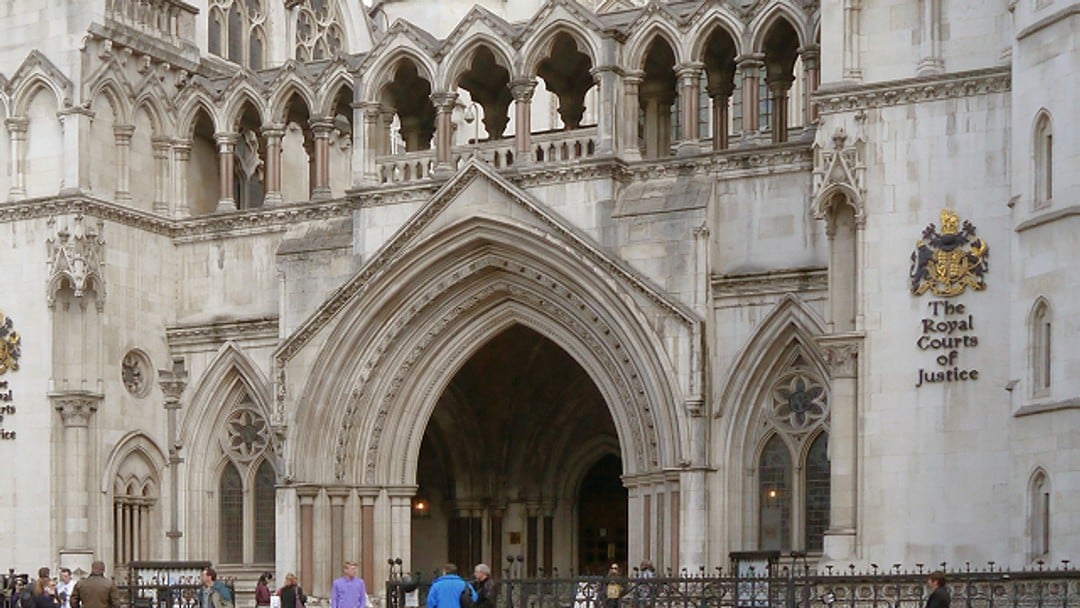
High Court substitutes erasure after NMC panel imposed suspension on nurse found to have humiliated dementia residents.
The High Court has allowed an appeal brought by the Professional Standards Authority for Health and Social Care (PSA) against a decision of the Nursing and Midwifery Council's Fitness to Practise Committee, substituting a striking-off order for a twelve-month suspension imposed on registered nurse Joanna Budzichowska. The judgement, handed down on 17 March 2026 by Deputy High Court Judge Sarah Crowther KC, also overturned two factual findings and raised significant questions about the Panel's approach to the sanctions guidance.
Ms Budzichowska faced charges arising from her conduct at two care homes: Old Convent Nursing Home in 2018 and Plas Penmon Care Home between 2018 and 2022. The Panel found proved a series of charges including failing to carry out observations on a deteriorating resident, silencing call bells, swinging a call bell at a resident's face, telling a resident her deceased mother was "dead and to stop asking for her", asking colleagues to falsely sign controlled drugs records, and a pattern of callous treatment towards Resident A — who, suffering from dementia and mobility difficulties, was left to crawl across the floor soaked in urine while Ms Budzichowska sat in the nearest chair.
Grounds 1 and 2: Charge 11 — intention to humiliate
The Panel had found that Ms Budzichowska's conduct towards Resident A was undoubtedly humiliating in effect but declined to find the requisite intention. The PSA argued this conclusion was not reasonably open to the Panel and that the reasons given were inadequate.
Crowther J agreed on both grounds. Applying the reduced level of deference available on appeals concerning inferences from primary facts — as established in GMC v Jagjivan [2017] EWHC 1247 (Admin) — she held that the inference of intent to humiliate was "irresistible on the evidence". The Registrant's own oral evidence, in which she described Resident A as having "deliberately thrown himself onto the floor to get attention" and as "wasting the time of staff", provided all that was needed to establish her state of mind. The Panel's own finding that her explanations were "implausible" and "untenable" made its conclusion on intention internally inconsistent. Charge 11 was substituted as proved.
Ground 3: Charge 13d — grabbing a resident's face
The Panel dismissed the charge that Ms Budzichowska had grabbed Resident B's face after that resident spat at her, treating a distinction between "grabbing the face" and "squashing the cheeks" as a material inconsistency in the evidence of the sole NMC witness, Colleague 5. Crowther J found this procedurally unfair: the witness had never been invited to address that distinction and had never used the words "in a violent manner", which the Panel had wrongly attributed to her. The Panel's reasoning contained a material error of fact, and its conclusion on inconsistency was not open to it on the evidence as a whole. The appeal was allowed on this ground; given the ultimate decision on sanction, Charge 13d was not remitted.
Ground 4: Sanction
The central question on sanction was whether the Panel had been entitled to impose a suspension order rather than strike Ms Budzichowska off the register. Crowther J held it had not.
The Panel's own findings — a pattern of uncaring conduct across two employers over several years, evidence of attitudinal problems incapable of being addressed through retraining, and insufficient insight — directly contradicted the checklist criteria for a suspension order under the NMC's Sanctions Guidance. The Panel's reliance on positive testimonials from Ms Budzichowska's current employer and a relative of a resident was irrational: such evidence could say nothing about whether she had gained insight into the triggers and motivations underlying her past conduct, and was therefore incapable of supporting a finding that the misconduct was "capable of remediation".
The Panel further failed to engage with the striking-off guidance's key questions — whether the conduct raised fundamental questions about Ms Budzichowska's professionalism, and whether public confidence in nurses could be maintained without erasure — despite having itself found that her misconduct "breached the fundamental tenets of the nursing profession and brought its reputation into disrepute."
Crowther J substituted a striking-off order, observing that members of the public “would be astonished that such a person could remain on the register of nurses.”
 Copyright & permissions