


Leighton Middle School governing body granted permission to challenge school admissions appeal panel decision
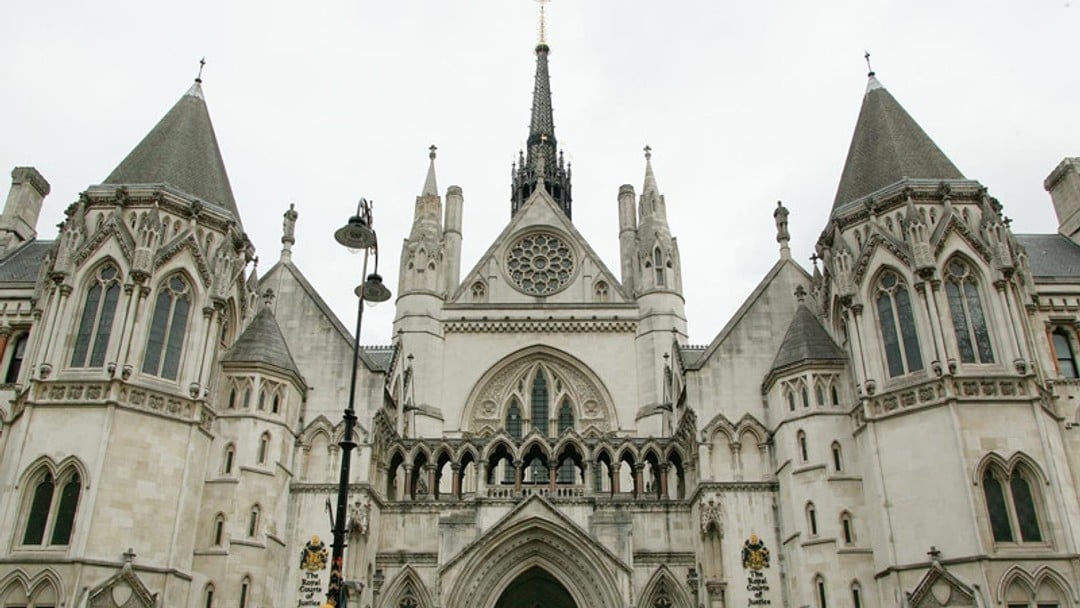
High Court grants judicial review permission after admissions appeal panel fails to follow statutory code.
The King (on the application of the Governing Body of Leighton Middle School) v Independent Appeals Panel of Central Bedfordshire Council [2026] EWHC 416 (Admin) concerns a challenge by a school's governing body to an Independent Appeals Panel decision admitting a Year 5 pupil, referred to as C, despite the school being oversubscribed. DHCJ Alison Morgan KC, sitting in the Administrative Court, granted permission to apply for judicial review following an oral hearing on 19 February 2026.
C's family moved into the catchment area of Leighton Middle School in June 2025. C's mother applied for a place but was instead allocated Gilbert Inglefield Academy, approximately 1.8 miles away. Her appeal cited financial hardship, the absence of a driving licence, health difficulties, and the impracticality of the journey with a young baby. The Independent Appeals Panel upheld her appeal in October 2025, finding that admission of one additional child would not prejudice the efficient provision of education or the efficient use of resources.
The governing body challenged that decision on two grounds. First, it contended that the Panel had failed to apply the mandatory requirements of the School Admissions Appeals Code 2022, particularly the structured two-stage framework set out in paragraphs 3.2 to 3.7. Second, it argued that the Panel had acted irrationally by relying on factual assertions — including comparisons of SEN provision across local schools and projections about pupil numbers — for which no evidential basis had been established during the hearing itself.
The court found both grounds arguable with a realistic prospect of success. On the first ground, the clerk's notes were found to be incomplete and could not be described as an accurate record. The decision letter, whilst asserting compliance with the Code, failed to explain how the Panel had worked through each required step. Notably, the letter appeared to incorporate considerations relevant only to the Stage 2 balancing exercise within what should have been a Stage 1 determination focused solely on prejudice to the school. The Defendant's submission that section 31(2A) of the Senior Courts Act 1981 precluded relief — on the basis that the outcome would not have been substantially different — was rejected. Given the opacity of the reasoning, it could not be said with confidence that a properly directed Panel would have reached the same conclusion.
On the second ground, the court held it arguable that the Panel had taken into account factual matters unsupported by the evidence presented, whilst potentially disregarding material raised by the headteacher. The Panel's deliberation notes referred to figures and comparative SEN data whose provenance neither party could identify, raising a genuine issue as to whether the decision was reached on a sound evidential basis.
The Defendant's contention that the claim had been brought without due promptitude was rejected. Although the claim form was issued on the final day of the three-month limitation period, the governing body had written a pre-action letter within three days of the decision, and subsequent delays in receiving the hearing notes and in the Defendant's engagement were taken into account. The court accepted that, in a case where the alleged unlawfulness arose from the obscurity of the decision letter itself, it was reasonable to await disclosure of the clerk's notes before commencing proceedings.
Following the grant of permission, the Defendant indicated it would not exercise its power under section 96 of the School Standards and Framework Act 1998 to compel admission pending the substantive hearing, and the application for interim relief was accordingly not pursued. The substantive hearing is listed for 10 March 2026.
 Copyright & permissions