



Justice Investments v Visalia Energia: security for costs, strike-out, and the limits of open justice
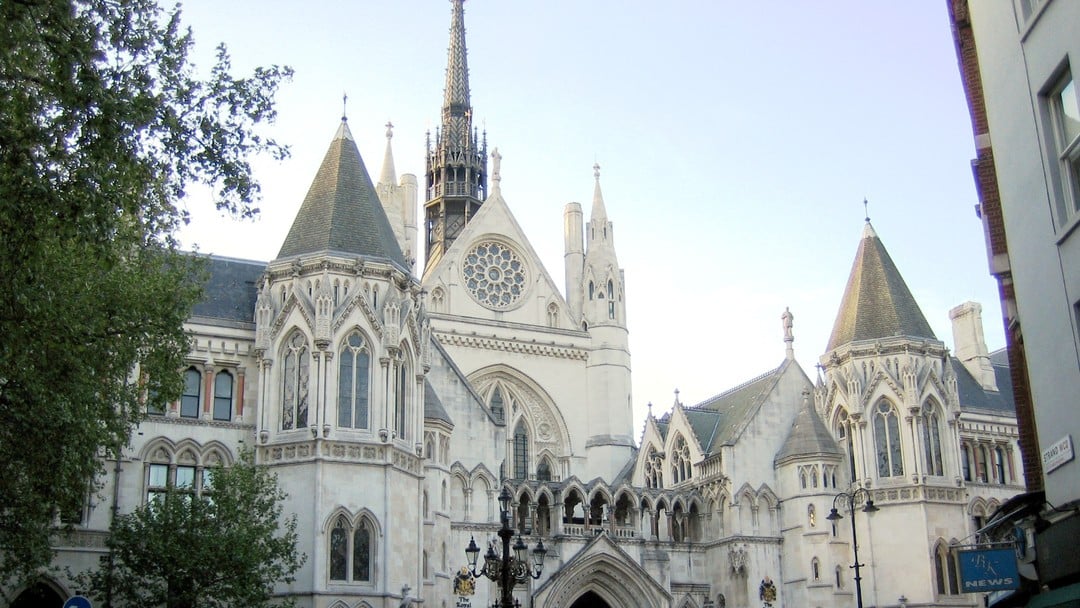
Security for costs ordered against an apparently impecunious claimant company where evidence of beneficial ownership and control was opaque and incomplete.
In a wide-ranging interlocutory judgement handed down on 23 March 2026, Mrs Justice Eady dismissed the claimant's second strike-out application, refused to restore a disposal hearing against three defaulting defendants, granted a restriction on the misuse of disclosed documents, and — critically — ordered the claimant to provide £250,000 in security for the defendants' costs within 42 days.
The underlying dispute
The underlying dispute concerns a €2 million loan advanced by a New Zealand company, Vivier and Company, to a Spanish energy firm, Visalia Energia SL (trading as Nace Energía), pursuant to a loan agreement structured around a profit share tied to the defendant's EBITDA. The claimant, Justice Investments Limited, asserts rights to that loan by way of a 2021 deed of assignment, pursuing claims in unlawful means conspiracy, inducing breach of contract, and breach of fiduciary duty. The first and second defendants deny all wrongdoing, and contest both the validity of the assignment and the authenticity of key evidence relied on by the claimant.
Strike-out application
On the strike-out application, the claimant argued that admissions in the defendants' amended defence — that certain agreements may have been executed after the dates they bear, and that metadata was missing or unexplained — disclosed no reasonable grounds for a defence and amounted to an abuse of process. The court rejected this emphatically, characterising it as an attempt to re-litigate points already determined by Master Dagnall. Applying the principles in Easyair Ltd v Opal Telecom Ltd [2009] EWHC 339 (Ch), Eady J confirmed that questions of document authenticity and metadata integrity are paradigmatically matters for trial, not summary disposal. The application was dismissed as wholly without merit.
Disposal hearing
On the disposal hearing, the claimant sought to proceed to an assessment of damages against the three defendants in default. The court declined, directing instead that those issues be adjourned to the trial of the live claims. The judgement notes that C's damages case against the defaulting defendants is "replete with references to D1 and D2", rendering a one-sided disposal hearing both wasteful of court resources and potentially productive of inconsistent findings. Any prejudice to the claimant in being kept out of its money was, the court held, adequately addressed by interest.
Misuse of disclosed documents
The CPR 31.22(2) application raised a less common issue: whether the claimant's letters to Spanish regulatory bodies, banks, ratings agencies, and professional firms — reproducing selectively quoted transcripts and mischaracterising judicial observations as adverse findings — justified a court order restricting further dissemination. The court found that the letters misrepresented statements made in open court, drew baseless allegations against opposing solicitors and counsel, and were sent with the apparent intention of damaging the defendants' standing in the Spanish business community. Exercising its inherent jurisdiction, the court granted a targeted restriction. The open justice principle, the judgement makes clear, does not licence the weaponisation of litigation transcripts.
Security for costs
The security for costs analysis is the most substantial element of the judgement. Applying Goldtrail Travel Ltd v Aydin [2017] UKSC 57 and Keary Developments Ltd v Tarmac Construction Ltd [1995], Eady J was satisfied that the threshold condition under CPR 25.27(b)(ii) was met: the claimant had no liquid assets, its attempts to enforce an existing interim payment award against the fifth defendant in Spain had stalled, and its only arguable assets were of uncertain realisability. The claimant's contention that any security order would stifle its claim failed for want of "full, frank, clear and unequivocal evidence" — the standard confirmed in Al-Koronky v Time Life Entertainment Group Ltd [2005] EWHC 1688 (QB). Investigative reports adduced by the defendants raised substantial questions about the true beneficial ownership and control of the claimant, the role of a former co-shareholder as a possible professional nominee, and the financial position of the individuals apparently directing the litigation. Those questions were not adequately answered. Security was fixed at £250,000 — below the £771,939.26 sought — in recognition of the uncertainties and the need to leave open a genuine choice as to compliance.
The case is now stayed pending payment of security; upon compliance, a CCMC is to be listed before Master Dagnall.
 Copyright & permissions