


Ferdi Colak v Government of Türkiye: Yalvac assurances and retrial attendance in extradition proceedings
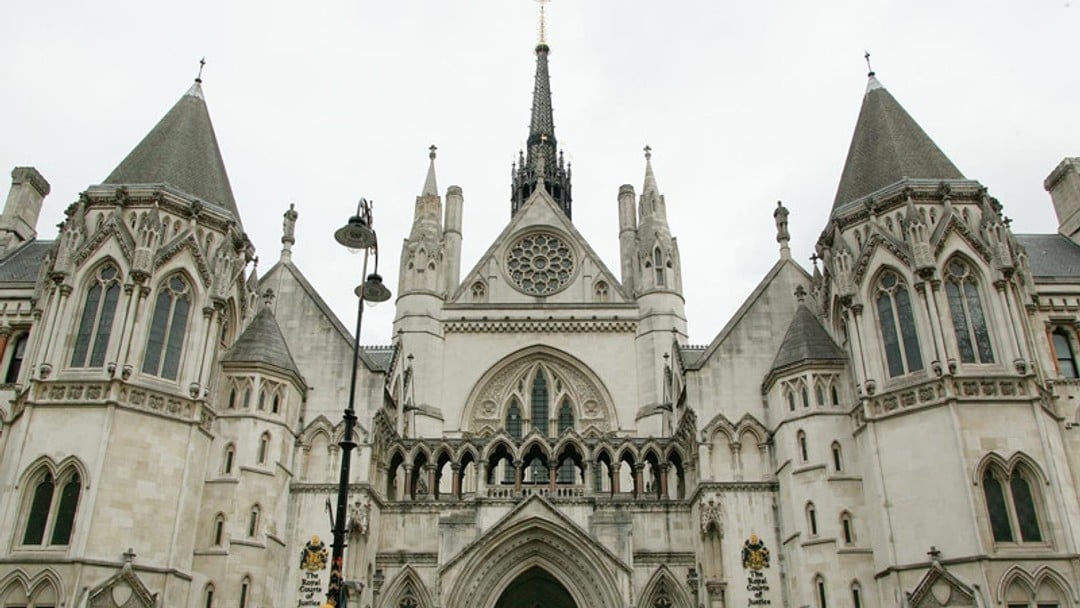
High Court grants limited permission to appeal on Yalvac prison assurances and retrial attendance.
In this extradition case, Fordham J granted limited permission to appeal on a narrow question concerning the adequacy of assurances regarding prison conditions in Türkiye. The appellant, aged 46, is wanted for extradition to Türkiye following conviction for kidnap in 2015, with a nine-year sentence.
The extradition request, dated 16 June 2017 and certified on 20 February 2018, originally covered three counts: kidnap, sexual assault, and threats, all relating to events on 21 August 2013. Following a three-day hearing in April 2021, District Judge Tempia ordered discharge of the sexual assault and threats counts pursuant to section 78(3) of the Extradition Act 2003, as these convictions had been quashed and remitted by Turkish appeal courts after the request was issued. The Home Secretary subsequently ordered extradition only for the kidnap offence on 21 June 2021.
The appellant attended a pre-trial hearing on 7 May 2015 but was deliberately absent from his trial on 7 July 2015, defeating his argument under section 85 concerning conviction in absence. An appeal court upheld the kidnap conviction on 17 January 2017 but remitted the other offences, leading to fresh convictions on 4 May 2017. The Turkish court has guaranteed the appellant a retrial on the kidnap offence if promptly requested post-surrender.
Four specialist witnesses gave evidence at the extradition hearing: Ms Saniye Karakas (human rights), Professor Rod Morgan (criminal justice), Professor William Bowring (human rights), and Professor Cornelius Katona (psychiatry). The district judge produced a comprehensive 176-paragraph judgement addressing all grounds of resistance.
The core issue on which permission to appeal was granted concerns the March 2025 Yalvac assurances. These guarantee detention at Yalvac Prison with four square metres personal space, but contain no specific provision for any in-person attendance at the guaranteed retrial. The assurances permit relocation only for 'security or disciplinary issues', with guaranteed floorspace maintained.
Fordham J considered it reasonably arguable that the assurances should address retrial attendance, either by incorporating the Uckac Assurance from Demir v Türkiye (No.1) [2024] EWHC 2351 (Admin), or by amending the relocation provision to include 'or in order to secure any in-person attendance at trial', or otherwise. The judge expressed concern about potential conflict if the Iskenderun trial court chose to permit or require in-person attendance whilst the appellant remained bound by assurances requiring detention at Yalvac, 630 kilometres away.
The Uckac Assurance guarantees video-link appearance from Yalvac, with four square metres personal space if detention closer to court becomes necessary during trial. Whilst this featured in Demir in an accusation request case where trial was central to extradition, the present case involves a conviction request where the retrial right, though guaranteed, represents an 'added extra' given the finding of deliberate absence.
In Yilmaz & Yilmaz v Turkey [2019] EWHC 1939 (Admin), the Divisional Court recognised that trial courts might 'order the detainee to be present before the court in person'. Fordham J considered it arguable that the March 2025 assurances place the extraditing court on a foreseeable collision course with any trial judge requiring in-person attendance, potentially leaving the trial judge and appellant in an invidious position where guaranteed floorspace and in-person attendance cannot both be secured.
Permission to appeal was refused on three other grounds. On the section 81 extraneous considerations issue, the judge found no reasonable grounds for believing the appellant would face discrimination based on his Kurdish ethnicity, Alevi religion, or political opinions. The district judge had properly evaluated extensive expert evidence, finding it generalised and unsupported by concrete evidence of bias in the appellant's specific proceedings. The charges were non-political, legal representation was provided throughout, and partial appeal success demonstrated judicial independence.
The abuse of process argument, centred on the discharged sexual assault and threats counts and ongoing tax matters, was rejected. Article 14 of the European Convention on Extradition provides clear speciality protection prohibiting prosecution or sentence implementation for pre-surrender offences other than those for which extradition was granted, absent consent from the Home Secretary. Following Belbin v France [2015] EWHC 149 (Admin), establishing abuse requires cogent evidence that the requesting state has acted to usurp the statutory regime. No expert witness identified any breach of treaty commitments by Turkish authorities. The speciality mechanism provides adequate post-surrender safeguards, distinguishing this case from Bartlett v Belgium [2012] EWHC 2480 (Admin).
On mental health and oppression under section 91, the district judge's application of principles from Turner v United States [2012] EWHC 2426 (Admin) was held to be unimpeachable. Professor Katona diagnosed PTSD, major depressive disorder, and alcohol use disorder, with an overall severity score of 36/40 in April 2021. His June 2025 report showed a score of 32/40. The judge found significant suicide risk with reduced ability to resist suicidal urges, but also found that medical provisions at Yalvac Prison, including constant monitoring for at-risk prisoners and referral to state hospitals, would sufficiently mitigate the risk. The judge emphasised that Yalvac represented a different environment from the police station and Hatay Prison where alleged ill-treatment occurred. There had been no acts of self-harm or attempted suicide, and no mental health treatment had been sought. The high threshold for oppression was not met.
An attempt to mount a freestanding oppression argument based on PTSD deterioration, relying on XY v Netherlands [2019] EWHC 624 (Admin) and ZA v Romania [2025] EWHC 595 (Admin), was rejected. The judge distinguished those cases where requested persons would return to the environment that triggered PTSD. Here, the ill-treatment occurred primarily at police hands and in a police station, with further mistreatment at Hatay Prison linked to incarceration as a sex offender. Yalvac Prison represents a materially different environment.
The substantive hearing on the permitted ground is envisaged as a half-day hearing with focused submissions. The respondent may wish to consider revised assurances addressing retrial attendance, potentially resolving the matter without further argument. The question of permission to adduce the January 2026 report of Ali Yildiz as fresh evidence on this issue was deferred to the substantive hearing.
 Copyright & permissions