


Fassone v Hugh James: professional negligence claim dismissed over historic child abuse settlement advice
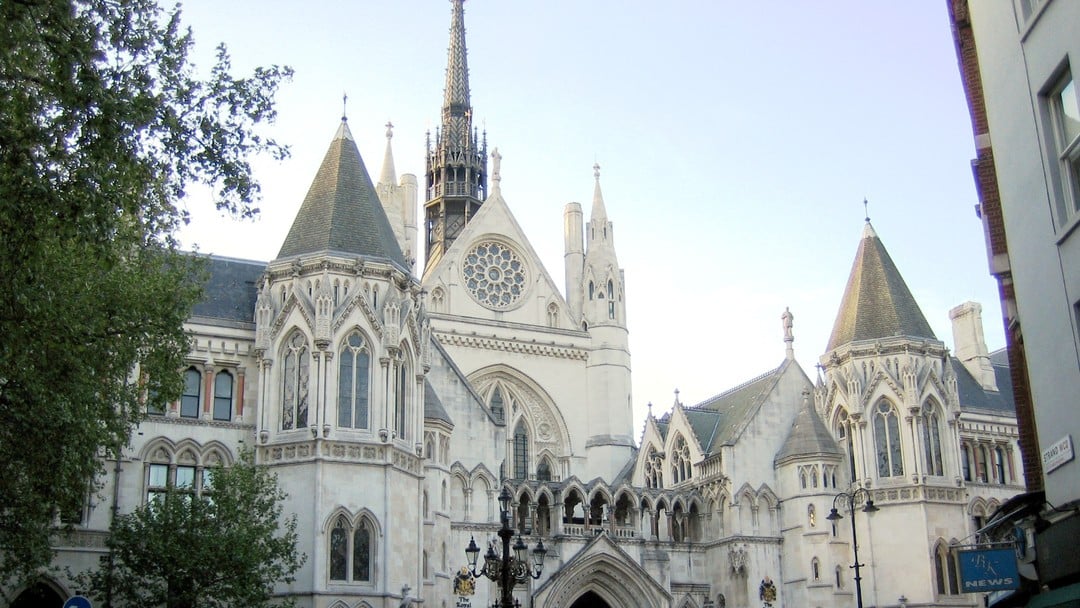
High Court finds no breach of duty where specialist solicitors advised acceptance of £10,000 settlement without expert psychiatric report or counsel's opinion.
In Fassone v Hugh James (A Firm) [2026] EWHC 364 (KB), Mrs Justice Foster dismissed a professional negligence claim against Hugh James Solicitors arising from their handling of a historic child sexual abuse claim against the English Benedictine Congregation (EBC). The claimant alleged he was negligently advised to accept a £10,000 settlement in 2018 when, properly advised, he would have recovered approximately £650,000.
The claimant attended Fort Augustus Abbey School in Scotland between 1983 and 1987, where he alleged serious physical and sexual abuse by staff. He had been unemployed since 1990 and suffered significant psychiatric ill health, including PTSD and paranoid schizophrenia. Hugh James, instructed in January 2018 on a conditional fee basis, identified four substantial hurdles from the outset: jurisdiction, limitation, vicarious liability, and causation. After extensive investigation — including a detailed review of the claimant's medical records and close analysis of the IICSA report on the EBC published in August 2018 — the firm advised settlement. The claimant accepted the EBC's Part 36 counter-offer of £10,000 in September 2018.
The claim centred on three alleged failures: not instructing counsel, not obtaining an expert psychiatric report, and not advising on potential loss of earnings and pension claims. Mrs Justice Foster rejected all three.
On the question of medical evidence, the court confirmed that there is no universal rule requiring a psychiatric report wherever medical issues arise in personal injury litigation. Each case falls to be assessed on its own facts and at the relevant time. Here, the disclosed medical records — including evidence of drug misuse predating attendance at the school, allegations of familial abuse, and longstanding diagnoses of paranoid schizophrenia — created profound causation difficulties that an experienced specialist solicitor was well placed to identify and weigh without expert assistance. The psychologist's report obtained for these proceedings, which failed to engage with significant historical materials, did not assist the claimant.
On the failure to instruct counsel, the court found that Alan Collins, a highly experienced specialist with over thirteen years' exclusive practice in child sex abuse claims, was fully equipped to assess the legal issues without referral. The vicarious liability analysis — particularly the distinction between the EBC's autonomous monastery structure and the Institute in Various Claimants v Catholic Child Welfare Society [2012] UKSC 56 — was one well within his expertise. Crucially, it was never pleaded that counsel's advice would have led to a different conclusion on liability.
The settlement advice was similarly upheld. Applying Griffin v Kingsmill and Moy v Pettman Smith, the court emphasised that advising on settlement requires nuanced professional judgement that courts should not impugn through hindsight unless the advice was so plainly wrong that no competent practitioner could have given it. That threshold was not met. The firm had explicitly warned the claimant in writing of the risk of under-compensation in the absence of a medical report, and the contemporaneous file demonstrated careful, thorough and well-documented advice throughout.
The judgement serves as a useful restatement of how courts assess alleged negligence in complex, multi-faceted abuse claims where liability is genuinely uncertain and settlement pressures are real.
 Copyright & permissions