


Christopher Ness v Jennifer Miller: High Court strikes out false imprisonment and data protection claims
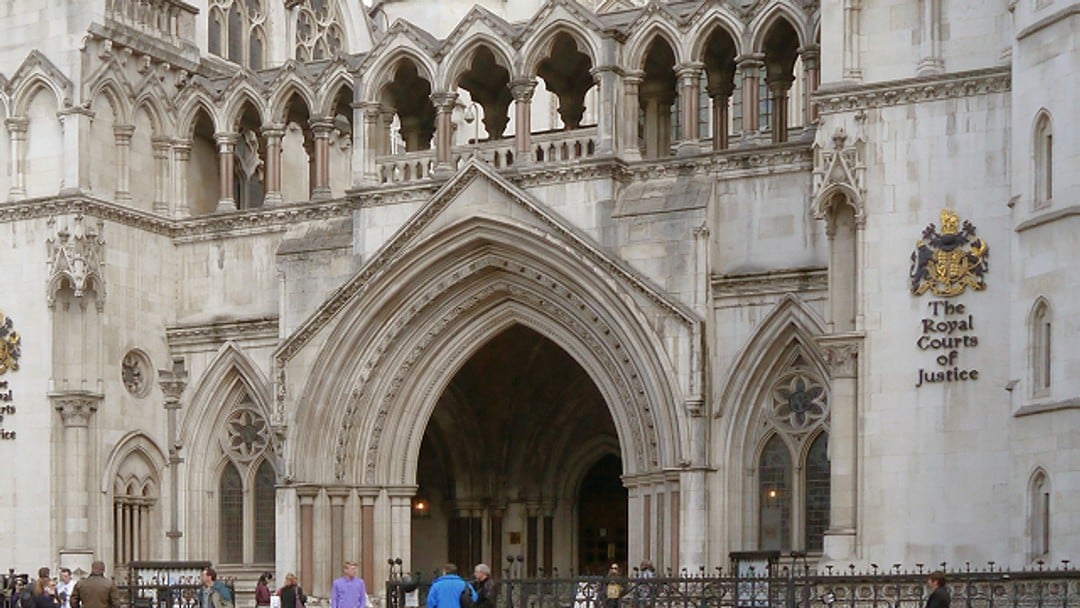
Court strikes out claims for false imprisonment and data protection, refusing amendments to add conspiracy.
The High Court has struck out a claimant's false imprisonment and data protection claims against the first defendant, whilst refusing permission to amend proceedings to add conspiracy claims and join additional defendants. Mrs Justice Heather Williams DBE delivered the reserved judgement on 27 January 2026, following a hearing on 9 December 2025.
Christopher Ness had brought a libel claim against Jennifer Miller relating to a YouTube video and five emails sent to England Athletics between February and March 2024. On 15 July 2025, the Court dismissed the libel claim after determining that Mr Ness had failed to establish that the words in the YouTube video referred to him, and that Ms Miller had not caused or procured publication of the England Athletics emails.
Mr Ness's action also included claims for false imprisonment and breach of the UK General Data Protection Regulation arising from his arrest by Surrey Police on 8 March 2024. He was detained at Staines Custody Centre for over 18 hours before being granted police bail. By August 2025, Mr Ness applied to add Michelle Sojka, Joanna Sojka and Lindsay Gauntlett as defendants, and to introduce a new conspiracy claim.
The false imprisonment claim
Ms Miller applied to strike out the false imprisonment claim on the basis that it disclosed no reasonable grounds for bringing proceedings. The claim alleged that Ms Miller had procured Mr Ness's arrest by giving false information to Surrey Police, thereby imposing a duty upon officers to arrest him.
Mrs Justice Williams analysed the applicable test from Davidson v Chief Constable of North Wales [1994] 2 All ER 597, which requires consideration of whether a defendant's actions "went beyond laying information before police for them to take such action as they thought fit and amounted to some direction, or procuring, or direct request or direct encouragement that they should act by way of arresting" the claimant.
The Court found that the pleaded claim failed to establish reasonable grounds. Importantly, there was no assertion that Ms Miller had explicitly or implicitly directed, requested or encouraged the arrest, nor that she had done anything beyond providing information to police for them to investigate. The allegation that her report placed a duty on officers to arrest Mr Ness was rejected. A report of an alleged crime imposes a duty on police to investigate and take appropriate action, but does not as a matter of law impose a duty to arrest the subject of the complaint.
Mrs Justice Williams emphasised that the claim could not succeed merely because Ms Miller's report triggered the arrest. She distinguished the circumstances from Barkhuysen v Hamilton [2016] EWHC 2858 (QB), where the complaint concerned a serious allegation which only the defendant could have witnessed, was made in the context of multiple earlier reports, and was found in substance to be a direct act of encouragement and procurement of arrest.
The Court also noted the allegation that Ms Miller's complaint was deliberately false was wholly unparticularised, failing to identify the respects in which the report was said to be knowingly false or any factual basis for this assertion.
The data protection claim
The data protection claim against Ms Miller related to the England Athletics emails. However, the Court had already found in its earlier judgement that Mr Ness had failed to establish Ms Miller had caused or procured publication of these emails. The pleaded claim was based entirely on factual allegations that had been rejected.
Counsel for Mr Ness sought to advance an alternative basis, arguing that Ms Miller was a "custodian" of information about his arrest and bail conditions and had breached her duty in passing this on. Mrs Justice Williams identified multiple difficulties with this contention. The allegation was not reflected anywhere in the pleading. The factual basis was entirely unparticularised, with no indication as to what Ms Miller was said to have done or to whom she had passed information. The legal basis had not been identified in terms of which UK GDPR or Data Protection Act 2018 duties were allegedly breached.
The data protection claim against Ms Miller was struck out as disclosing no reasonable grounds and as an abuse of process, being contrary to the findings made in the earlier judgement.
The proposed conspiracy claim
Mr Ness sought to amend his claim to add an unlawful means conspiracy claim against all defendants. Mrs Justice Williams emphasised that such allegations must be clearly pleaded with appropriate particularity, setting out all specific facts and circumstances supporting an inference of dishonesty.
The proposed pleading was found to be wholly deficient. It did not identify details of the alleged agreement between defendants, nor the "concerted action" said to have been taken in pursuance of that agreement, nor why the conduct was unlawful. No specifics were given regarding witness statements or other evidence relied upon, nor which defendant was responsible for particular actions.
Furthermore, the Claimant failed to show the alleged conspiracy was supported by evidence establishing a realistic prospect of success. The best evidence put forward comprised Facebook messages from May 2024 and emails from April 2024 – all post-dating the March 2024 arrest and thus incapable of showing involvement in bringing it about. The Court found the evidential position was weak and included plainly unmeritorious points.
Applications to join additional defendants
The Court refused applications to join Michelle Sojka, Joanna Sojka and Lindsay Gauntlett to the proceedings. As the false imprisonment claim against Ms Miller was struck out, there was no viable basis in law for the proposed parasitic claims against the additional defendants. The conspiracy claim was inadequately pleaded and lacked proper evidential foundation.
Regarding the proposed data protection claim against Ms Gauntlett, whilst she accepted processing Mr Ness's personal data in sending the England Athletics emails, the Court found it was not "desirable" to add her pursuant to CPR 19.2. With all existing claims struck out, proceedings would otherwise be at an end. The data protection claim was very modest in nature with no pleaded particulars of loss, damage or distress. There was no good reason for such a claim to be pursued in the High Court. The proceedings were at an early stage regarding any claim against Ms Gauntlett, with an amended Claim Form required and no finalised Particulars of Claim ready for service.
Mrs Justice Williams noted it would be a matter for the Claimant whether to bring separate proceedings by way of a properly formulated data protection claim in the County Court.
Witness immunity considerations
Counsel for Ms Miller submitted that the claims were precluded by the witness immunity rule, relying on Crawford v Jenkins [2014] EWCA Civ 1035, which held that immunity extended to initial complaints made to police. However, Mrs Justice Williams noted the difficulty in reconciling this with Davidson, which was subsequently applied in Barkhuysen and Ali v Heart of England NHS Foundation Trust [2018] EWHC 591 (Ch).
Given this was not a clear-cut "bound to fail" issue appropriate for resolution on assumed rather than actual facts, the Court proceeded on the basis most favourable to the Claimant, assuming the Davidson principle applied and the claim was not precluded by witness immunity.
All claims were struck out and the proceedings dismissed. The parties were given an opportunity to make written submissions on consequential matters, including costs.
 Copyright & permissions