


BHO v Secretary of State for Health and Social Care: NHS charges, late EUSS applications and the limits of the Withdrawal Agreement
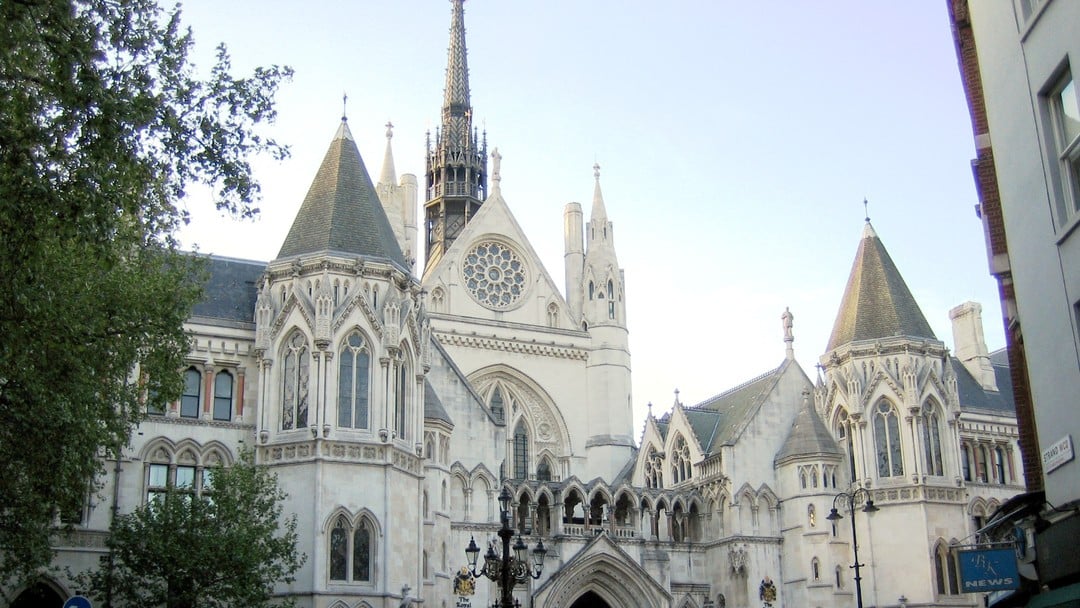
High Court rules NHS charges on late EU Settlement Scheme applicants are lawful under the Withdrawal Agreement
The High Court has dismissed a judicial review challenge to the lawfulness of NHS charges imposed on a Latvian national whose daughter received cancer treatment during a period when she held no valid UK residence status under the EU Withdrawal Agreement (WA).
The claimant, BHO, had resided in the UK since 2014 and held settled status. Her daughter, AK, born in 2010, joined her in 2017. An in-time EUSS application for AK was refused in December 2021 following a failure to provide documentary proof of the parent-child relationship. BHO did not become aware of the refusal until early 2023, when the family were stopped at the border returning from Latvia. A second application was submitted on 21 March 2023 and granted on 29 June 2023, accepted as a valid late application under Article 18.1(d) WA on the basis that reasonable grounds existed for missing the deadline.
AK had been diagnosed with leukaemia in February 2021 and underwent chemotherapy throughout this period. North-West Anglia NHS Trust ultimately invoiced BHO for £16,653.81 in respect of treatment provided between 25 January 2022 — when AK's appeal rights from the first refusal expired — and 21 March 2023. Following concessions on the "course of treatment" provisions in regulation 3(5) of the NHS Charging Regulations 2015, the sum in dispute was reduced to £1,988.50.
The retrospectivity question
BHO's first ground contended that the grant of residence status under Article 18.1 WA operated with ex tunc effect, rendering her daughter's pre-application residence lawful from the Implementation Period Completion Day (31 December 2020). Mrs Justice Heather Williams rejected this squarely.
Drawing on established principles of treaty interpretation under the Vienna Convention, the court held that the text of Article 18 provides no basis for retrospective effect. The new residence status comes into existence only when both pre-conditions — lawful residence in accordance with Title II Part 2 WA, and the making of a compliant application — are satisfied. The deeming provisions in Articles 18.2 and 18.3 cover the application grace period and the pending-application period respectively. The absence of any equivalent provision for "Period 2" (the gap between the expired deadline and a late application) was not inadvertent. The parties to the WA had actively addressed late applicants through Article 18.1(d), yet made no provision for this interim window. The court declined to supply one by interpretive implication.
The court also found that the reasoning in Fertre v Vale of White Horse DC [2025] EWCA Civ 1057, on which the claimant placed significant reliance, was neutral on the retrospectivity point. The Court of Appeal's characterisation of Article 18 as a "gateway" to Title II rights does not entail that, once the gateway is passed, rights are treated as having been held from an earlier date.
Arguments advanced by the AIRE Centre, intervening, based on Articles 1, 7 and 24 of the EU Charter of Fundamental Rights — human dignity, family life and the best interests of the child — were also rejected. The court was prepared to assume, without deciding, that the Charter was engaged, but concluded that a prospective grant of residence status would not invariably negate human dignity within the meaning of the case law, and that no evidence of destitution or comparable harm was before the court on the facts.
Indirect discrimination and justification
The Secretary of State accepted that the NHS Charging Regulations produced indirect discrimination engaging Article 4 of Regulation 883/2004, as applied by Articles 30 and 31 WA. The sole issue under Ground 2 was whether that discrimination was objectively justified.
The court accepted the "Constitutive Scheme Reason" as sufficient justification: imposing charges on late beneficiaries during Period 2 promotes and ensures the integrity of the UK's constitutive scheme, in which lawful residence depends on satisfying both the residence and application conditions. To treat late beneficiaries as if they were lawfully resident for charging purposes during a period when the WA itself contemplated they were not, would sit in uneasy tension with the prospective effect of the Article 18.1 grant.
Three further justifications advanced by the Secretary of State — NHS funding and planning, fairness, and administrative clarity — were each rejected. The financial impact of exempting late beneficiaries from charges was found to be minimal relative to overall NHS income, and the evidence did not support a risk to financial stability of the kind required by Commission v United Kingdom [2016] 1 WLR 5049 or A v Veselibas Ministrija (C-243/19).
Both grounds were dismissed. The court declined to make a reference to the Court of Justice of the European Union under Article 158 WA, being satisfied that the matters were acte clair.
 Copyright & permissions