


Berg v Jones: BBC editor's libel claim turns on fact-opinion distinction
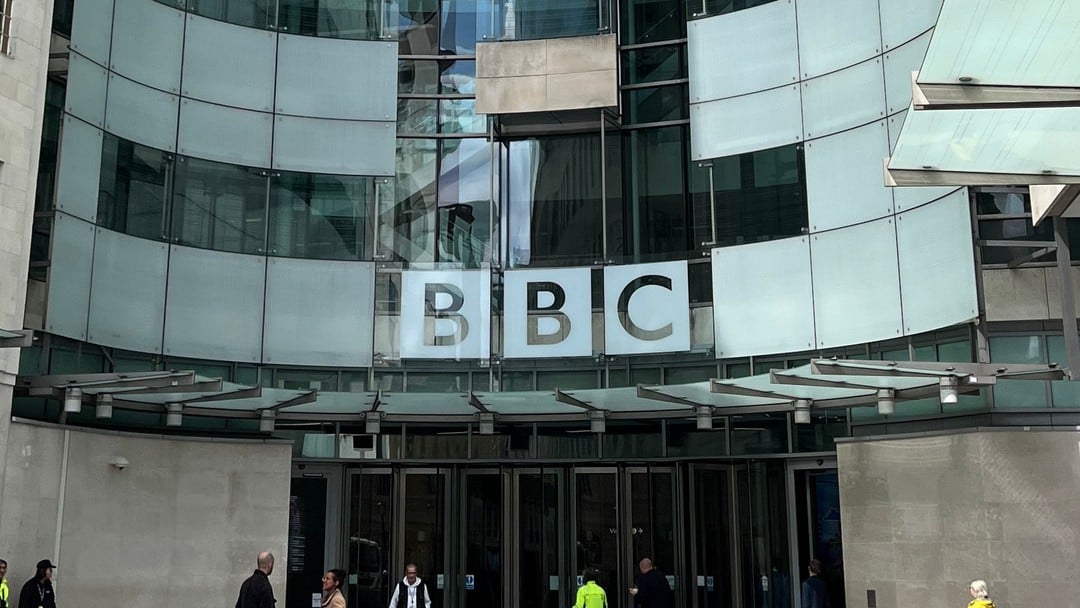
A High Court ruling on BBC bias allegations clarifies when editorial criticism constitutes opinion in libel proceedings.
A libel claim brought by a senior BBC journalist against political commentator Owen Jones has resulted in a preliminary ruling that allegations of pro-Israel editorial bias amount to a statement of opinion rather than fact, with the High Court finding the imputation nonetheless defamatory at common law.
Raphael Berg, Middle East Editor for BBC News Online, brought proceedings arising from an article published on 19 December 2024 in Drop Site News under the headline "The BBC's Civil War Over Gaza". The piece, written by Jones following interviews with a number of current and former BBC staff, alleged that Berg had shaped the corporation's coverage of the Israel-Palestine conflict so as to favour Israel, including by editing stories in ways that promoted Israeli government narratives and failed to humanise Palestinian casualties.
Mrs Justice Steyn, sitting in the King's Bench Division's Media and Communications List, was asked to determine the natural and ordinary meaning of the words complained of, whether that meaning was defamatory at common law, and whether the statement constituted fact or opinion for the purposes of s.3 of the Defamation Act 2013.
The meaning found by the court was that Berg, in his senior editorial role and as a writer, had consistently failed to meet the BBC's editorial standards of impartiality and fairness by shaping coverage so as to favour Israel — including by promoting Israeli narratives and failing to humanise Palestinian victims — thereby producing biased and imbalanced journalism. The judge accepted that this meaning was defamatory.
The central dispute lay in the fact-or-opinion characterisation. Berg's counsel argued the article read as a report of a behind-the-scenes investigation, drawing on insider accounts not available to the reader, and that the allegations were accordingly presented as established fact. The defendant's position was that the article amounted to critical assessment of a published body of journalistic work on an inherently contestable topic, and therefore fell on the opinion side of the line.
Steyn J accepted the defendant's characterisation. She noted that the article made clear on numerous occasions that the assessment of pro-Israel bias was grounded in the product of Berg's editing and writing, with many specific examples given. The subject matter — published reporting on a polarising conflict that by its nature invited critical response — and the transparency of the underlying material all pointed toward opinion. Applying the principles in Koutsogiannis v The Random House Group Ltd [2019] EWHC 48 (QB) and Blake v Fox [2023] EWCA Civ 1000, the judge held that a reasonable reader would appreciate the allegation as the defendant's opinion.
On the question of whether the bias was conscious or deliberate — a distinction with significant bearing on the gravity of the meaning — the judge found that the article did not take a clear position. References to Berg's history, associations, apparent credulousness and deference, alongside the BBC's own denial of the allegations, conveyed the impression that any lack of objectivity might be subconscious. The claimant's attempt to establish that the defendant had accused him of knowingly and deliberately distorting coverage was rejected as an analysis that the ordinary reader would not derive from a single reading.
The court also confirmed that the statement sufficiently indicated the basis of the opinion, satisfying the second condition under s.3(3) of the 2013 Act, by reference both generally to the BBC's coverage of the conflict and specifically to Berg's own reporting.
No defence has yet been filed. The defendant has indicated he may contest responsibility for the article's five-paragraph introduction, which was written by Drop Site News's founding editor rather than Jones himself. Steyn J noted that neither party considered this distinction material to the preliminary issues.
 Copyright & permissions